Women's Hijab: Materials, Styles, and Tips for Choosing the Right One

Much more than a simple accessory, the hijab accompanies the silhouette, completes an outfit, and allows for the expression of personal style. Light chiffon, soft jersey, breathable modal, or luminous satin: each material offers a different drape, opacity, and feel. Choosing the right model allows for combining modesty, comfort, and elegance in daily life as well as on special occasions.
In this Maison Layina guide, discover how to choose a women's hijab based on material, season, outfit, and desired look, as well as our tips for wearing and caring for it sustainably.
What is a hijab?
The word hijab has a broad meaning associated with modesty. In the fashion world, it commonly refers to a veil worn around the head and neck, leaving the face visible. There isn't just one way to wear it: shapes, drapes, and materials vary according to personal preferences, cultures, seasons, and occasions.
In English, the searches "hijab," "hijabs," "women's hijab," and "women's veil" can refer to the same category of scarves. The key is to choose a piece that is comfortable to wear, suitable for your coverage needs, and consistent with your wardrobe.
Which hijab material to choose?
The chiffon hijab
Chiffon captivates with its airy and elegant appearance. Its fluid drape is particularly suitable for ceremonies, evening wear, and dressy outfits. As this material is light and sometimes slippery, an underscarf or a few discreet pins can help maintain the drape. Also check the opacity, especially with light shades.
The jersey hijab
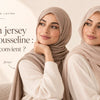
Stretchy, soft, and generally easy to put on, jersey is popular for everyday wear. It naturally conforms to the shape of the head and can often be worn without pins. Its weight creates a regular drape, but a thick jersey can be warmer in summer. Choose a flexible quality that isn't too tight and retains its shape.
The modal hijab
Modal offers a soft touch, a matte appearance, and beautiful fluidity. Light and breathable, it is well-suited for warm days and natural drapes. Its suppleness allows for creating several styles without adding too much volume around the face.
The cotton or viscose hijab
Cotton is comfortable, breathable, and easy to integrate into a casual outfit. Viscose provides more fluidity and a lighter feel. These materials are versatile, but their behavior may vary with washing: always consult the care instructions.
The satin hijab
With its luminous surface, satin adds a sophisticated touch to an abaya, caftan, or oriental dress. It is suitable for weddings and formal occasions. To prevent it from slipping, opt for a non-slip underscarf and a simple drape that preserves its shine.
How to choose a comfortable and opaque hijab?
Before choosing a veil, observe the material in natural light. Some light colors become more transparent when stretched or layered only once. If you're looking for more coverage, choose a dense fabric, a deeper shade, or a format that allows for a double drape.
- Check opacity: Place the fabric in front of a light source without stretching it excessively.
- Check softness: Edges and seams should not irritate the skin.
- Adjust weight: A fabric that is too heavy can pull backward, while a very light fabric will require more support.
- Choose the right dimensions: They should allow for the desired style without creating unnecessary volume.
- Think about the whole day: Opt for a breathable material if you wear your hijab for several hours.
Which hijab to wear depending on the season?
In spring and summer
To compare lightness, opacity, and number of layers, discover our tips for choosing a hijab material in summer.
Look for light and breathable materials like modal, certain viscoses, or fine cotton. Sand, cream, taupe, dusty pink, and sage tones easily complement a summer palette. A less layered drape also helps maintain a feeling of lightness.
In autumn and winter
Jersey, slightly textured fabrics, and denser materials offer more comfort. Chocolate, burgundy, deep green, midnight blue, and warm gray shades structure a seasonal outfit and easily pair with long coats and abayas.
How to choose the color of your hijab?
There is no mandatory rule: the best color is the one you feel good in. To create an easy-to-coordinate wardrobe, start with neutral tones like beige, taupe, brown, ivory, gray, and black. Then add a few colors that echo your dresses, abayas, or accessories.
For a harmonious outfit, choose a hijab in the same chromatic family as the garment, but slightly lighter or darker. For an elegant contrast, pair a neutral outfit with a deep color. Near the face, natural light remains the best way to check if a shade flatters you.
How to adapt the drape to your style?
If your veil shifts during the day, our method for a slipping hijab helps you check the underscarf, format, and balance of the drape.
The lines of the drape influence the overall look. A veil gently framing the face creates a natural appearance. More structured folds give a dressed-up result, while a loose drape provides fluidity. Rather than following strict rules according to face shape, try several volumes and observe which one gives you the best balance and most comfort.
Maintenance also depends on the material. Chiffon may require magnets or adapted pins, while jersey and some modals hold more easily without fasteners. Always be careful not to pull too tightly around the head or under the chin.
How to match a hijab with an oriental outfit?
With an abaya
A plain abaya allows for playing with textures. Pair a matte abaya with a slightly satin veil for an occasion, or choose a tone-on-tone modal hijab for a refined everyday style.
With a caftan
When the caftan has gold or silver embroidery, pick up a discreet shade present in the details. A simple hijab avoids competing with the ornaments and maintains the balance of the outfit.
With an oriental dress
Before choosing the veil, define the style of the outfit with our guide to oriental dresses according to the occasion. The neckline and ornaments then help choose the volume of the drape.
You can create a monochrome ensemble or choose a complementary color. If the dress already has patterns, opt for a plain veil. For a minimalist dress, a refined texture or a slightly luminous finish can enrich the silhouette.
With a djellaba
Check the volume around the neckline and any hood. Our women's djellaba guide explains the cuts, materials, and details to consider when composing the outfit.
How to care for your hijabs?
Proper care preserves the color, texture, and drape of the fabric. Always read the label before washing. For delicate materials, opt for hand washing or a gentle cycle in a mesh bag, with cool water and a mild detergent. Avoid wringing the veil, then let it air dry flat or hung without marking clips.
Iron at a low temperature when the material allows. For chiffon or satin, place a thin cloth between the iron and the hijab or use steam delicately. Store clean models, folded or hung, away from direct light.
Discover Maison Layina hijabs
Maison Layina offers a selection of hijabs designed to accompany women daily and on special occasions. Pleasant materials, easy-to-match colors, and neat finishes make up a collection faithful to our universe of elegance and modesty.
Explore our hijab collection or discover the selection dedicated to women's hijabs.
Frequently asked questions about hijabs
What is the difference between a hijab and a veil?
In common fashion parlance in French, the words hijab and veil are often used to refer to a scarf worn around the head and neck. However, the word hijab has a broader meaning related to modesty.
Which hijab material slips the least?
Jersey is generally appreciated for its natural hold and elasticity. Some modal or textured cotton hijabs also hold well. Chiffon and satin may require a non-slip underscarf or discreet pins.
Which hijab to choose for summer?
Opt for a light and breathable material, such as fine modal, soft viscose, or light cotton. Limit layering and choose a color suitable for your outfit and your need for opacity.
How to check if a hijab is opaque?
Observe the fabric in front of a light source and check its appearance when slightly stretched. Light colors may require a double drape or a matching underscarf to provide more coverage.
Can you wear a hijab without pins?
Yes. Jersey and some textured or modal hijabs can be worn without pins depending on the chosen style. Hijab magnets are also a discreet solution that avoids piercing the fabric.
How to choose the dimensions of a hijab?
Choose the format according to the number of wraps, the desired length on the chest, and the volume sought. A long rectangular model offers several possibilities, while a more compact format facilitates simple styles.
How to wash a chiffon or satin hijab?
Follow the care label. Generally, a gentle hand wash or mesh bag wash, in cool water, protects delicate fibers. Do not wring the fabric and use a very low temperature for ironing.
Where to buy an elegant women's hijab online?
Maison Layina offers an online hijab collection and a selection dedicated to women's hijabs, designed to combine comfort, elegance, and modesty.