Plus-size caftan: choosing the right cut and drape
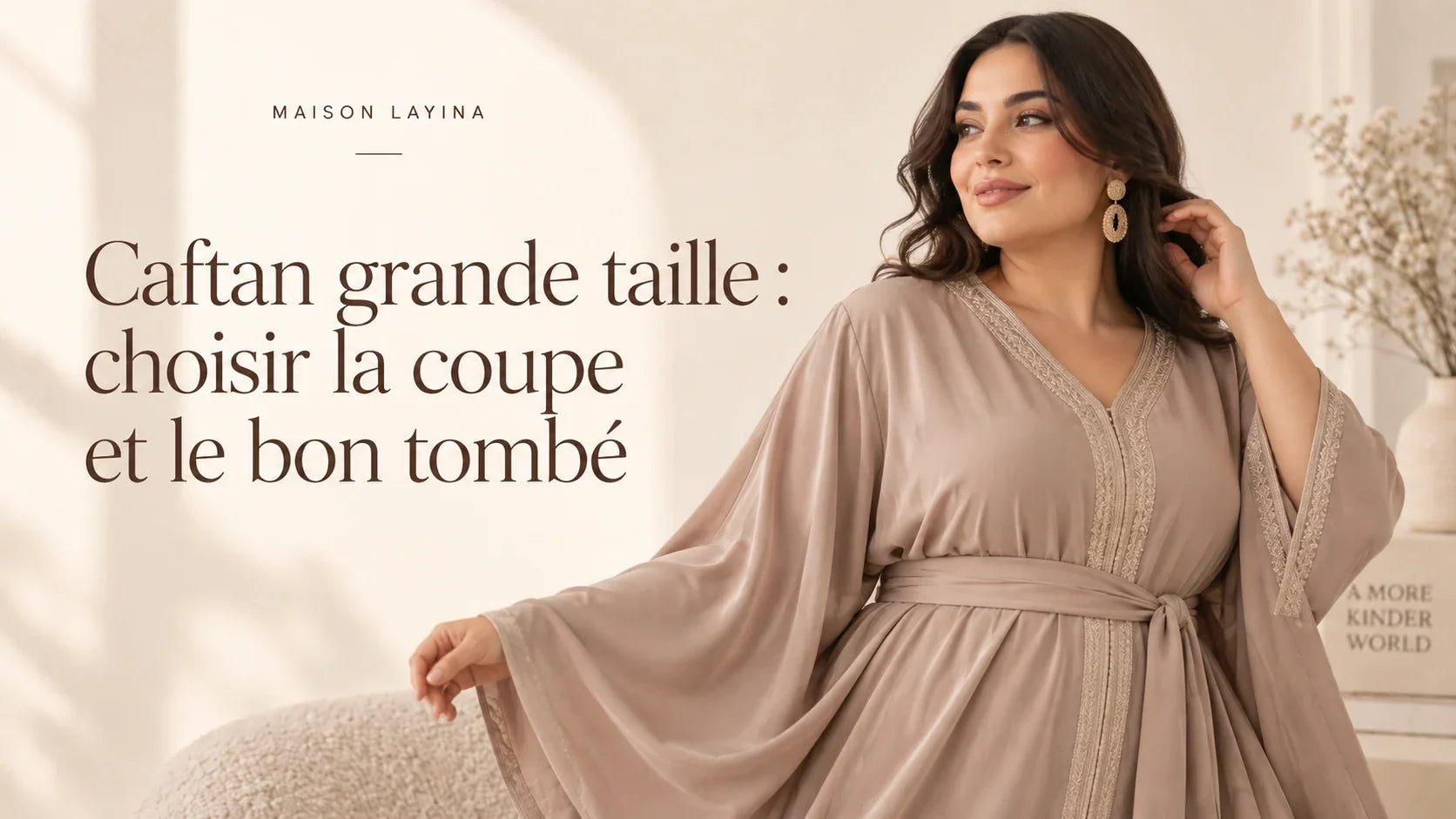
When choosing a plus-size caftan, start with your measurements and the drape you prefer. The right cut will allow ease in the arms, bust, and hips, with a length appropriate for your shoes. Systematically going up a size does not solve all proportion issues.
You don't have to choose a dress to "hide" your figure. The goal is to feel comfortable and rediscover the style you like, with or without a belt. Our caftan guide provides key pointers to help you discover this garment.
Read the size chart before choosing a size
An XL or a size 48 can correspond to different dimensions depending on the model. Start by identifying what the chart indicates: body measurements or finished garment measurements. These two systems are not directly comparable.
Measure your bust at its fullest point, your waist, and your hips, without pulling the tape tight. Add an upper arm measurement if the sleeves are fitted. For an online purchase, comparing the width of a caftan you already own can also help, provided you follow the same method as the product description.
Four areas that determine comfort
- Shoulders: The garment should allow you to move your arms forward without pulling backward.
- Bust: Fastenings and seams should not gape when you sit down.
- Arms: Test elbow flexion; an embroidered sleeve may be less flexible than the main fabric.
- Hips: Walk and sit down to check that the fabric doesn't restrict your movements.
If the top fits but the dress is tight around the hips, a more flared cut might be more suitable than a larger size all over. Conversely, shoulders that are too wide cannot always be easily corrected with a belt.
Straight, flared, or belted cut: choosing your look
A straight cut can offer a continuous line; a flared cut provides more volume towards the bottom. A belt allows you to modify the drape when the design allows for it. It's not about classifying body types, but about choosing the space and structure you desire.
Try the belt loosely, then sit down. Check its usable length, fastening system, and position. A belt visible in a photo is not necessarily included: check the exact contents of your order before preparing your outfit.
Fabric and lining: look beyond the word "fluid"
The main fabric, lining, and embellishments work together. A supple fabric can be restricted by a narrow lining; dense embroidery can locally reduce ease. If the description indicates elasticity, ask which parts of the garment are affected instead of relying on the fabric to compensate for an ill-fitting size.
To compare material effects, our article velvet or satin caftan helps you distinguish between appearance, composition, and comfort. No material is mandatory for a plus size: your use and preferences remain the best starting points.
Adjust the length instead of assuming heels by default
Try on the caftan with the shoes you will actually wear. You should be able to walk without stepping on the hem. If you prefer flat shoes, set the length with those from the start, rather than altering your entire outfit to compensate for a dress that is too long.
Before alterations, show the seamstress any embroidery, the lining, and the bottom trim. Ask for a quote and a timeframe: shortening an embellished piece can be more complex than hemming a plain one.
Prepare your purchase without multiplying accessories
For a ceremony, factor in the garment, any alterations, and genuinely missing items. Reuse your hijab or shoes if you like the overall look. You can then browse our caftan collection and compare available dimensions, without assuming that all styles come in all sizes.
Our last tip: do a full fitting well in advance of the occasion, keeping the garment in its original condition until your choice is finalized.
Frequently Asked Questions
Should I go up a size for a loose caftan?
Not automatically. Check if the measurements correspond to the body or the garment and if ease is already accounted for. A larger size can make the shoulders or length less suitable.
Can I wear a belt with a plus-size caftan?
Yes, if you like that look and the style lends itself to it. Check the belt's length and try it on while seated, without trying to tighten it excessively.
What if my bust and hips correspond to two different sizes?
Ask for advice with your measurements and the specific reference. A different cut might be more suitable. Don't choose solely based on the smallest area.
Are wide sleeves suitable for all situations?
They can be comfortable, but their opening warrants trying them on while moving. Check your desired coverage and how much they get in the way when you eat or pick up an object.
Can a "one size fits all" caftan be suitable for a plus size?
It depends on its actual dimensions. "One size" indicates only one size is offered, not compatibility with all body types.
-
Posted in
caftans, Conseils, Mode modeste