Square or rectangular hijab: choosing your style
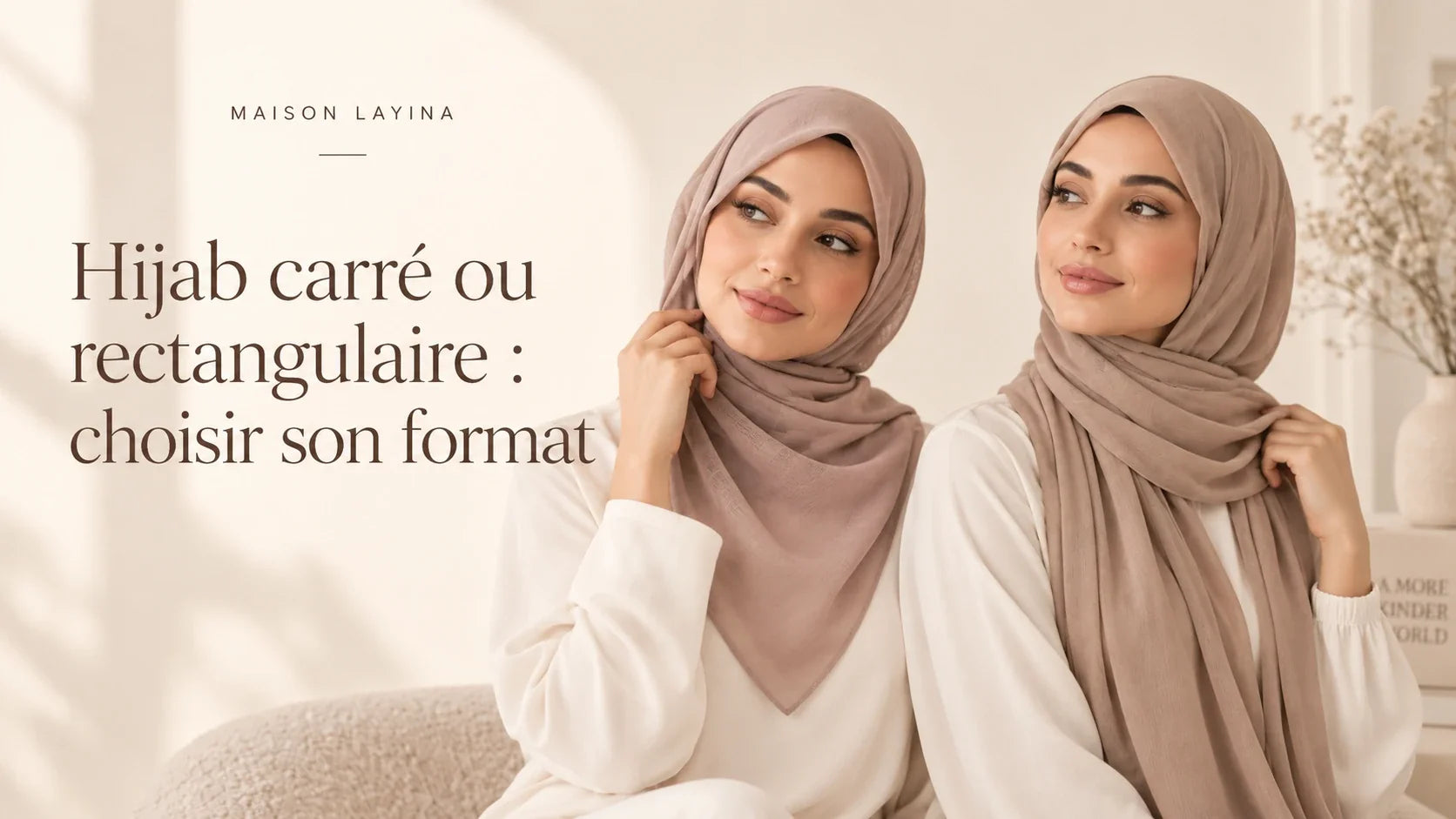
Choose a square or rectangular hijab depending on the drape you like to create, the available dimensions, and the desired coverage. No single format is ideal for all women. The material, fabric weight, and how it is worn also influence the result.
Have you found a color you like but are unsure about the shape? Our hijab materials and styles guide provides general guidelines. Here, we focus on the format and a comparison you can make with a veil you already own.
Compare dimensions before names
"Square," "long," or "maxi" do not provide a precise dimension. Note the length and width in centimeters, then compare them to a hijab you wear comfortably. Measure it flat, without stretching, and note what you like or would like to change in its drape.
For example, if you run out of fabric in front after your usual wrap, see which part of the format is used by that wrap. If you find the veil too bulky around the neck, examine the number of layers and thickness before concluding that you simply need to shorten the fabric.
The square: a shape to try with your fold
A square can be folded into a triangle to create a point and distribute the fabric around the face and shoulders. The depth of the fold alters the visible length and available space. The same square can therefore produce different results without changing size.
Check the placement of the pattern after folding, especially if you choose a print. A centered design may disappear under the overlaps, while a border becomes very visible around the face. The right choice depends on the effect you want to achieve.
The rectangle: distributing the length between the panels
A rectangular veil allows you to play with the difference in length between the two sides and with one panel brought over the shoulder. The width also matters: a long but narrow rectangle will not give the same result as a wider model.
Before purchasing, imagine the gesture you actually use. If you always create a simple drape, extra length that you then have to hide may not be useful to you. Conversely, multiple wraps or more extensive coverage may require more fabric.
The material can change your format preference
A format that you like in a thin fabric may seem bulkier in a thick material. The weight of the panel, the flexibility, and the surface of the fabric influence its position. Therefore, compare the format and material together rather than choosing them independently.
For hot days, our article on hijabs in summer helps you consider layers and opacity. If your main difficulty is staying put, consult the solutions for a slipping hijab: a change in dimensions is not always the answer to the problem.
A simple four-step test
- Put on your usual bonnet or underscarf if you use one.
- Create your drape without pulling tightly on the fabric to gain length.
- Turn your head and extend your arms to check the coverage and movement of the veil.
- Add the collar, jacket, or bag with which you will wear the outfit.
Note the area that bothers you: neck, shoulders, chin, or chest. You can ask for a specific dimension or photo instead of choosing a larger format without knowing if it will solve the problem.
With an abaya, dress, or djellaba
A high neckline and an open collar do not occupy the same space under the drape. If you wear an abaya, try the closure in its usual position. With a hooded dress, also look at the back and shoulders.
A hood adds another volume to consider. Our guide for wearing a djellaba daily elaborates on this combination. The choice of format must remain compatible with your preference for coverage, without forcing you to reorganize your entire outfit with every movement.
Which format to buy first?
Start with the one whose dimensions and handling you understand best. It is not necessary to buy both formats to decide. Compare with a veil you own, then choose an easy-to-integrate color using our guide to matching a hijab to your outfit.
Discover Maison Layina hijabs by checking the exact shape, dimensions, and type of model. An instant or pre-formed hijab is not just compared as a square or rectangular piece of fabric: also read its donning and adjustment instructions.
Frequently Asked Questions
Is a rectangular hijab always easier?
No. It depends on the drape you are familiar with, the material, and the dimensions. Choose the format appropriate for your movements.
Does a square hijab necessarily offer less coverage?
No. The size of the square, the fold, and how it is worn determine the coverage achieved.
What does the word maxi mean?
This is a term to be verified by exact dimensions. It does not define an identical format among all sellers.
Do you need a large format if the hijab slips?
Not automatically. The bonnet, material, and balance of the panels can also explain the movement.
How to compare two formats online?
Note the length and width, compare them to a veil you already wear, and ask for any missing details before ordering.
-
Posted in
Conseils, Hijab, Mode modeste