Velvet or satin caftan: which to choose?
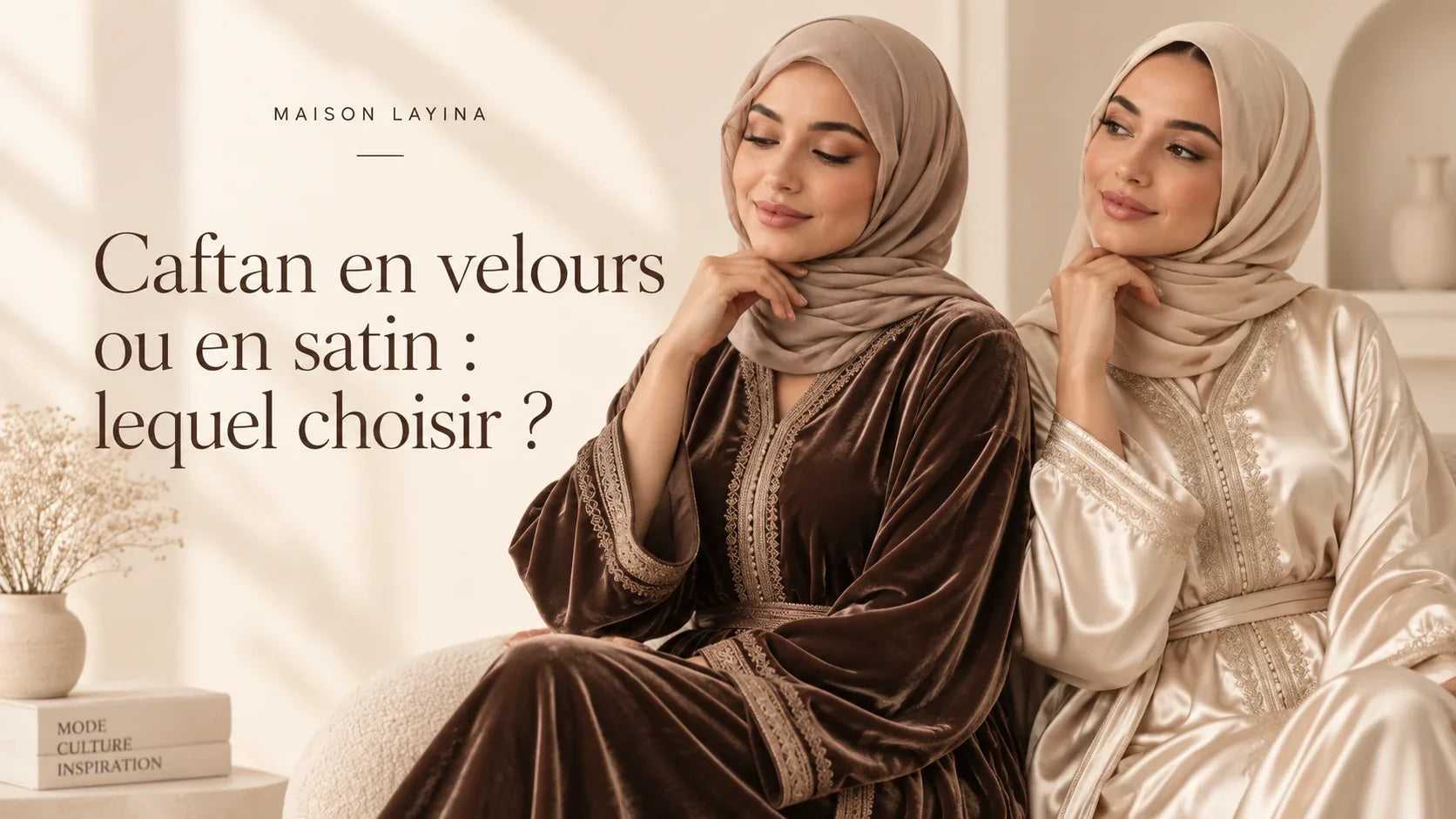
To choose between a velvet caftan and a satin caftan, start by considering the desired look, then check the composition, thickness, and lining. Velvet offers a soft, plush surface; satin has a smooth, shiny appearance. Neither name alone guarantees comfort, opacity, or the quality of an outfit.
This comparison is intended for women preparing for a reception, family celebration, or formal outing. To first discover the different forms of this garment, please see our Moroccan caftan guide.
Velvet and satin: what exactly are we talking about?
The word "velvet" primarily describes a fabric with a face covered in short, dense pile. Satin is recognizable by its smooth, lustrous appearance; it can be made from various fibers. Therefore, a satin fabric is not automatically silk. These distinctions are detailed in the definitions of velvet and satin in Larousse.
On a product description, look separately for the composition of the main fabric and that of the lining. An evocative brand name does not replace this information. If it's missing, ask for it before choosing, especially when you know the materials you like to wear.
Compare the two looks for your occasion
| Criterion | Velvet caftan | Satin caftan |
|---|---|---|
| Visual effect | Textured, interesting with subtle details. | Luminous reflections, to be balanced with accessories. |
| Comfort | Check actual weight, lining, and ease of movement. | Check fluidity, opacity, and feel against the skin. |
| Finishing touches | Observe pile direction and rubbed areas. | Observe seams and fabric when stretched. |
| Care | Follow the model's label, including embroidery. | Follow the label without assuming it's washable like other satin. |
Choose according to the venue, not just the season
For an evening in a heated room, a thick, lined caftan might be too heavy even in winter. Conversely, a reception with an outdoor component requires thinking about the layer worn over the shoulders. Ask yourself where you will spend most of the evening and how long you will be sitting, standing, or moving.
Our suggestion: if the dress already has a prominent texture or sheen, start with a plain hijab and a discreet bag. Then try just one more dressy accessory. This method allows you to create a personal outfit without having to buy a whole new ensemble.
Observe the drape during a proper fitting
Look at the outfit from the front and profile, with the belt if provided. The fabric should drape as you wish without the seams pulling at the bust, hips, or arms. Sit down for a few minutes: a caftan that is comfortable standing might lack ease of movement once your legs are bent.
Also examine the dress under various lighting conditions, without wetting it or removing its tags. A photograph on a screen does not always accurately show transparency, reflections, or texture. If you're unsure about proportions, our article on plus-size caftans and good drape details useful measurement points, whatever your size.
Plan the budget for the complete outfit
Compare the cost of the caftan with that of any necessary alterations, an underskirt, and recommended care. A model requiring complex alterations near embroidery may need prior consultation. There is no universal price that alone proves the quality of velvet or satin.
Before ordering from our caftan collection, check the chosen model's information, included items, and delivery conditions to your destination. To preserve the finishes afterward, consult our tips for caring for an embroidered or beaded caftan.
Frequently Asked Questions
Is satin always silk?
No. Satin can be made from different fibers. Check the exact composition of the caftan and its lining; the word "satin" describes an appearance, not a guarantee of silk.
Is a velvet caftan only for winter?
Not necessarily. The weight, lining, cut, and room temperature matter more than a seasonal rule. Try on the complete outfit to assess your comfort.
Which one should I choose for a wedding?
Both can be suitable depending on the dress code. Focus on the level of finish, freedom of movement, and the balance between the caftan and its accessories.
Does a lining guarantee opacity?
It can improve coverage, but its fabric and extent must be checked. Also check the sleeves, openings, and unlined parts.
Can both fabrics be ironed the same way?
No. Refer to the garment label and precautions related to embellishments. If information is missing, seek advice before applying heat.
-
Posted in
caftans, Conseils, Mode modeste