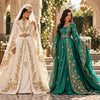
Which caftan to choose for a wedding as a guest?
To choose a wedding caftan as a guest, consider the dress code, the venue, and the amount of time you'll spend in the outfit. A cut that allows you to walk and sit, a length suitable for your shoes, and well-balanced finishes are just as important as the color.
Are you looking for a modest outfit for a reception, a civil wedding, or a family celebration? This Maison Layina guide will help you prepare your look. To discover traditional styles and details, also consult our Moroccan caftan guide.
Why wear a caftan to a wedding?
The caftan offers a long garment whose character can range from the most refined to the most ornate. Embroideries, braids, sleeves, and belts create different effects: therefore, there is no single "wedding caftan." Some pieces are designed for a spectacular look, others for discreet elegance.
The Moroccan caftan also has its own artisanal heritage, presented by UNESCO in its fact sheet dedicated to its arts, traditions, and know-how. This cultural reference does not mean that all garments sold under the name caftan are handmade or made in Morocco. The origin and manufacturing method must be specified for each product.
Which outfit according to the venue and time of the ceremony?
For a daytime reception
A flowing cut, restrained finishes, and a color you love can be enough to create a dressed-up outfit. If the celebration takes place outdoors, consider the ground: a dragging hem will be difficult to manage on a lawn, paving stones, or gravel.
For a formal evening
You can choose more prominent embroideries, a luminous fabric, or a deep color. However, maintain consistency between the garment and accessories: if the caftan already has details around the face, a simple clutch may be sufficient.
For a long day with multiple stages
Imagine the ceremony, the journey, the meal, and standing moments. Voluminous sleeves can be very beautiful, but less practical at the table. An adjustable belt can be pleasant, as long as it doesn't compress your stomach when you sit down.
If you prefer a more understated or modular silhouette, our comparison open or closed abaya presents another way to compose a modest outfit, especially for an event with a less ceremonial style.
What color caftan to choose as a guest?
The best starting point remains the invitation. If the newlyweds announce a palette, respect it before looking for a supposedly "ideal" color. If in doubt about white, ivory, or an outfit very similar to the bride's, simply ask their preference: customs vary between families and celebrations.
To build your outfit, try one of these options:
- A deep color: navy blue, dark green, or burgundy with discreet accessories.
- A soft palette: dusty pink, sage, or light blue, checking the opacity of the fabric.
- A luminous outfit: choose a metallic detail already present in the embroidery to coordinate the clutch.
These combinations are style suggestions, not rules for body shape or skin tone. Look at the color near your face in natural light and choose the one in which you feel good.
Embroidery, lace, satin or velvet: what to look for?
Beyond the fabric name, look for its exact composition, weight, and the presence of a lining. A satin appearance alone does not mean the garment is silk. Similarly, a photograph is not enough to appreciate its comfort for several hours.
On an embroidered or beaded piece, observe the contact areas: underarms, wrists, and neckline. Very prominent embellishments can snag a delicate veil or be uncomfortable if you carry a shoulder bag. On lace or a light color, check the truly lined parts.
For a wedding during a warm period, limit unnecessary layering. For a cool season, plan an outer layer compatible with the sleeves. The room temperature sometimes matters more than the season indicated on the calendar.
How to choose the cut and the right size?
Measure your body, then read the model's chart
Take your bust, waist, and hip measurements. Also check shoulder width if the cut is structured. Size numbers can differ from one supplier to another: a label does not replace measurements.
If the product is advertised as one-size-fits-all, ask for its dimensions. "One-size-fits-all" describes a size offering, not a promise of fit for all body types.
Choose the length with the intended shoes
Put on shoes of a comparable height to those for the wedding when checking the length. Take a few steps and go up a small step. If you plan to swap heels for flats during the evening, consider the change in height.
Allow for ease of movement
The caftan should allow you to sit and raise your arms without pulling tightly at the chest or shoulders. Do not choose a size too small, relying on the belt to adjust everything. It structures the silhouette, but does not correct a lack of ease.
What to wear under a wedding caftan?
The answer depends on the opening, lining, and opacity. A slip can be useful under certain pieces, but is not always necessary. If you wear one, make sure its straps, neckline, and hem do not show unintentionally.
For a light-colored caftan, test layering in natural light rather than assuming a white underlayer will be invisible. The goal is a comfortable and consistent look with your desired level of modesty.
The veil, belt, and jewelry photographed are not automatically included. Check the order contents before preparing the rest of your outfit.
How to combine hijab, jewelry, and shoes?
If you wear a hijab, choose its volume taking into account the neckline. An already rich embroidery can be highlighted by a simple drape. For a refined outfit, a different texture adds depth without requiring a lot of jewelry.
Our guide to hijab materials and styles helps you compare the looks. Before the event, test the whole outfit: some ornaments snag delicate fabrics, and a misplaced pin can mark a delicate fabric.
Above all, choose shoes that you can wear for the planned duration. A refined outfit does not require high heels; elegant flat shoes or low heels can be suitable if the caftan's length is appropriate.
What budget to plan and when to order?
Calculate the budget for the complete outfit: caftan, possible alterations, underlayer, missing accessories, and delivery. A very ornate model may require more delicate care; consider this if you wish to wear it again.
Before ordering for a specific date, check the announced lead times, then allow a margin for fitting and possible alterations. An estimated lead time is not a guarantee of delivery for your ceremony. Ask for confirmation if the date is close.
The final check before the wedding
- Try on the entire outfit with the planned shoes and veil.
- Walk, sit, and raise your arms.
- Check the fasteners and belt.
- Check for opacity in natural light.
- Consult the label before any ironing or steaming.
- Transport the outfit without crushing the embellishments.
To compare the available silhouettes, discover the Maison Layina caftan collection. First, choose a cut suitable for your event, then check the characteristics and measurements on the model's product sheet.
Frequently Asked Questions
Can a caftan be worn at a civil wedding?
Yes, if its style matches the dress code and venue. A refined cut can suit a simple ceremony, while a more formal reception may lend itself to more embellishments.
Can a guest wear a white caftan?
Ask the couple for their preference. White and ivory may be reserved for the bride in some celebrations, but customs are not the same everywhere.
Do you have to wear a belt with a caftan?
No. Some styles are worn loose, others are designed with a belt. Check if it's included and if you like its support when sitting.
How to choose a caftan when you are petite?
Prioritize checking lengths and measurements rather than a color rule. A hem adapted to your shoes often improves comfort more than a change in style.
Can you choose an abaya instead of a caftan?
Yes, depending on the desired level of formality. A dressy abaya can offer an alternative; look at the cut, opacity, and necessary accessories rather than just the garment's name.
-
Posted in
Caftan, Caftan mariage, Mode modeste, Tenue invitée